
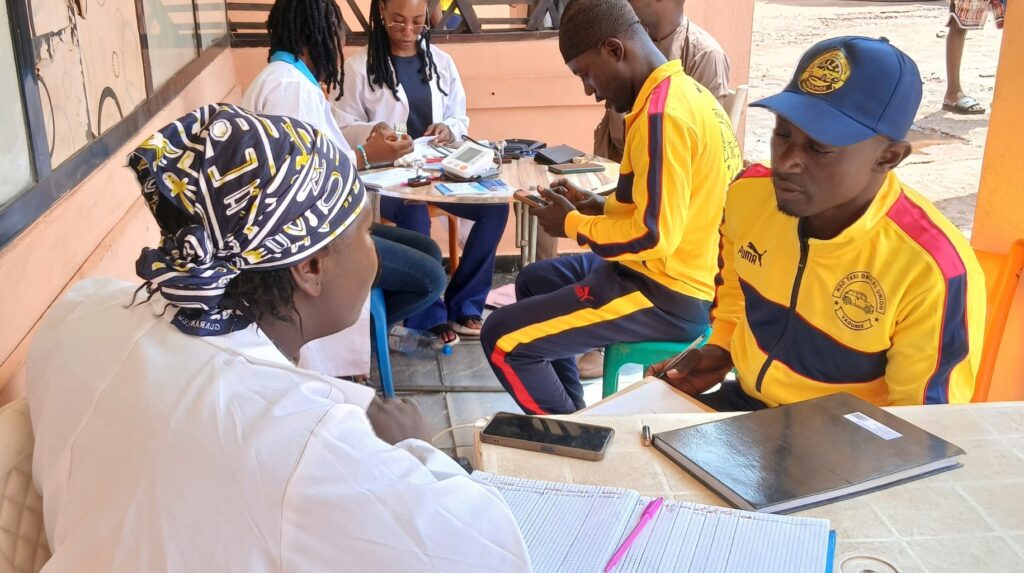
On a January morning in Yaoundé, 50 taxi drivers sat down for something many of them had never had before: a proper health check.
These weren’t just any drivers. They were displaced Nso taxi drivers, men who had left their homes because of conflict, rebuilt their lives behind the wheel, and, like so many others in their situation, had little to no access to routine healthcare. Long hours on the road, stress, and irregular meals put them at high risk for conditions like hypertension and diabetes, conditions that often go unnoticed until it’s too late.
Our team met them where they were. We checked blood pressure, tested for diabetes, and talked with each driver about their health in a way that felt personal, not clinical. For many, it was the first time anyone had asked how they were really doing.
This outreach taught us something important: healthcare has to go where people already are. It can’t always wait behind clinic doors. That lesson has shaped how we design every outreach since, mobile, direct, and built around real people’s lives.
Fifty drivers were screened that day. But the bigger win was this: fifty men now know a little more about their own health, and a little more about a foundation that sees them.